Key Takeaways
- Bridging the Insurance Gap: A dedicated line of credit covers your upfront material and labor costs while you wait out 30, 60, or 90-day delays on insurance payouts and depreciation checks.
- Capitalizing on Storm Surges: Having access to revolving working capital allows you to scale up quickly during peak storm seasons without draining your operational cash reserves.
- Commercial Project Support: Ready access to funding ensures you can easily float the necessary expenses for large commercial and municipal jobs that pay only upon final completion.
- Simplified Underwriting: Revenue-based business credit lines look at your actual cash flow and bank deposits rather than relying solely on strict traditional bank requirements.
Cash Flow Challenges for Roofing Contractors
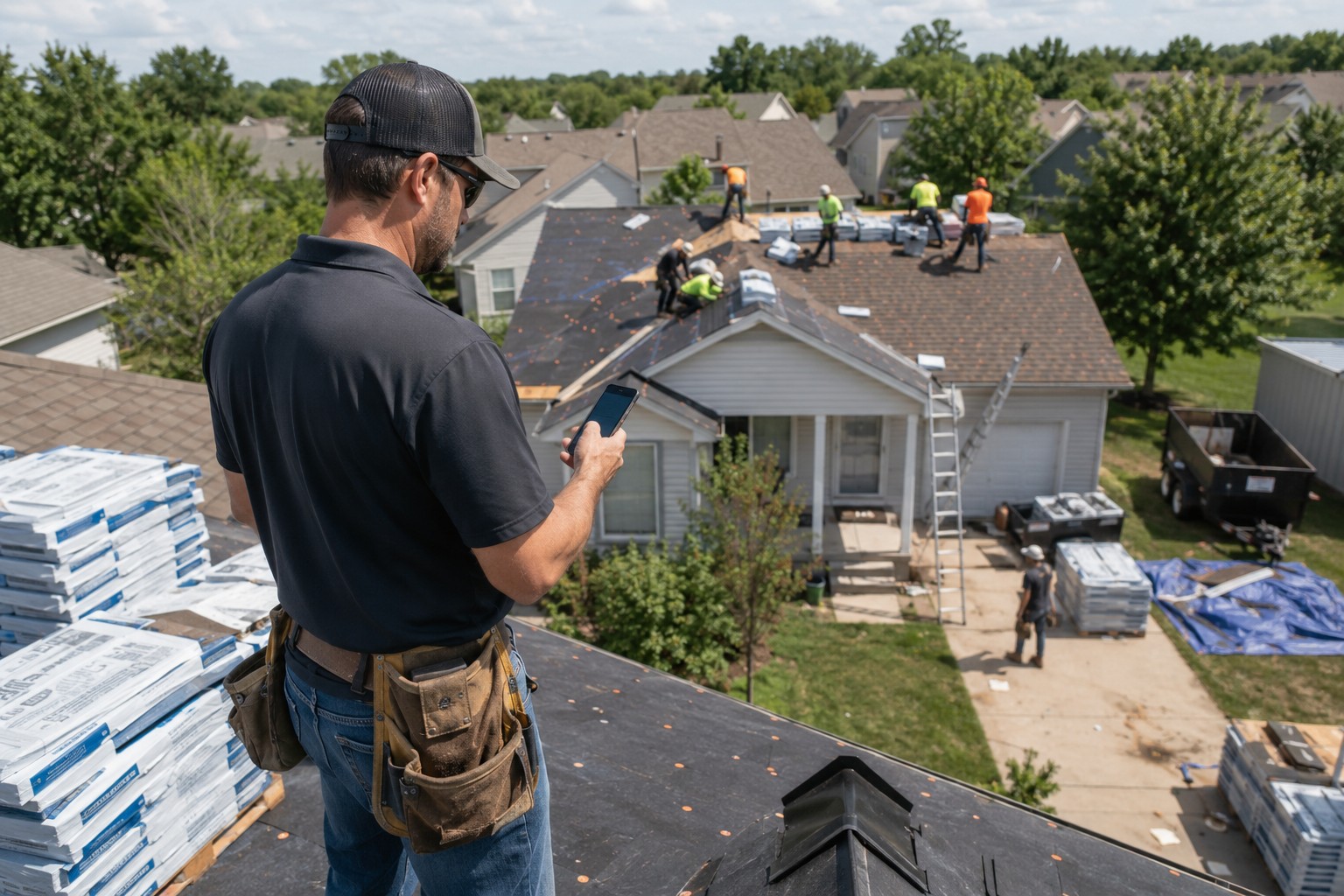
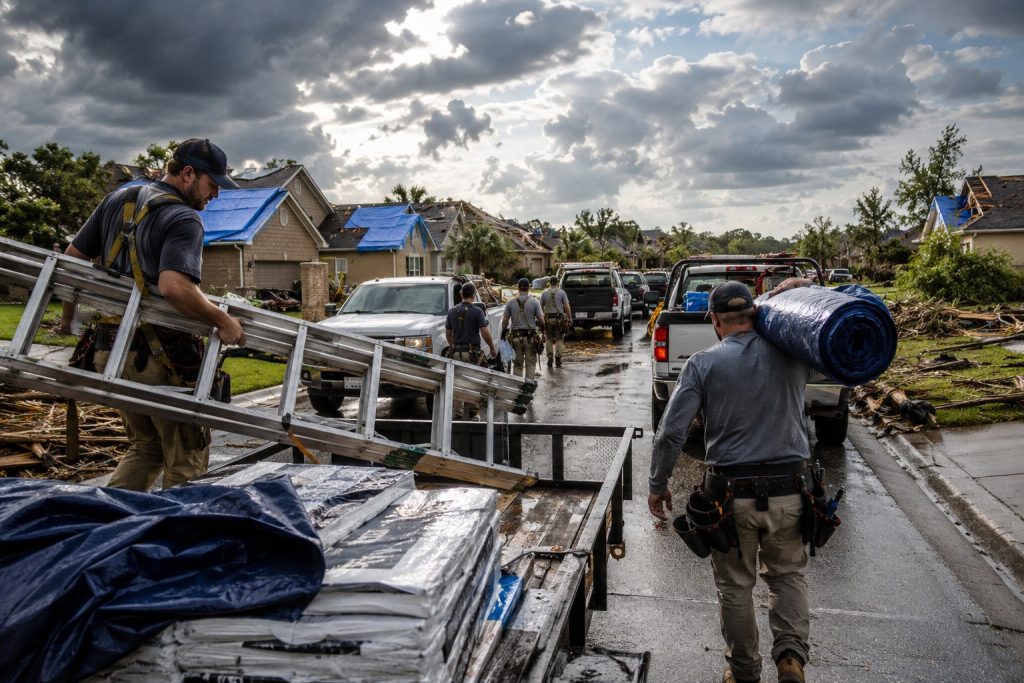
A construction business line of credit for roofing contractors can be a valuable tool for managing the cash flow challenges that come with running a roofing company. Running a roofing company is not without its hurdles. Roofing contractors experience cash flow fluctuations due to a variety of factors. There are seasonal shifts due to stronger demand during storm seasons, as well as dealing with complex insurance claims. The first check covers the actual value of the roof, while the second check covers the replacement cost. In addition, insurance companies can sometimes pay on a net 30, 60, or even 90-day delay. Storm season can create all kinds of demand; however, without working capital, you may end up losing out on major opportunities.
Using a Construction Line of Credit to Cover Roofing Expenses
A credit line for a roofing company can help your business cover all sorts of expenses while you are waiting on insurance payments to arrive. Purchase brand-name materials such as Owens Corning shingles and underlayment, cover weekly payroll or 941 payroll taxes, and manage multiple jobs at the same time without cash flow issues.
A revolving line of credit can also help your business finance large commercial projects. Many commercial and municipal jobs require contractors to issue purchase orders that are paid upon completion. These projects can take weeks, sometimes even months, for final completion. Access to working capital can help your business cover the expenses it needs and keep your projects moving towards final completion and payment.
What You Will Learn About Roofing Lines of Credit
As a former owner of a tension shade structure installer, I understand the importance of having access to working capital. The purpose of my guide is to help you get a better understanding of how a revenue-based credit line works. Learn about basic requirements as well as the ins and outs of underwriting. Apply for a roofing contractor line of credit with confidence by understanding available credit limits, funding amounts, repayment options, and what lenders look for when reviewing your application.

How Roofing Contractors Use a Line of Credit to Grow Revenue
Key Takeaways
- Tiered Capital Scaling: Credit lines match your specific project sizes, scaling from $25,000 for managing residential cash flow up to $500,000 for enterprise-level commercial and government contracts.
- Rapid Catastrophe Mobilization: Mid-tier funding ($50,000–$100,000) allows you to instantly deploy storm-chasing crews, rent field equipment/RVs, and buy material trailers when disaster strikes.
- Bulk Material and Asset Purchasing: Higher tier accounts enable upfront bulk purchasing of shingles and underlayment, securing better vendor pricing and ensuring your crews stay busy simultaneously.
- Accounts Receivable Safety Net: Commercial-level lines of credit bridge crucial cash gaps when your outstanding customer and insurance receivables outpace the capital sitting in your operating bank account.
$25,000–$50,000 Roofing Line of Credit for Small Jobs
Apply for a $25,000 roofing company credit line to cover expenses such as small residential jobs or to juggle a few jobs at a time, while keeping your cash flush. Smaller-sized roofing contractors can benefit from a $25,000 to $50,000 roofing contractors credit line to cover expenses such as shingles, underlayment, or even cover labor while waiting on final payment from customers or insurance claims.
$50,000–$100,000 Roofing Line of Credit for Mid-Size Projects
Roofing contractors with more revenue who need additional capital can qualify for a credit line between $50,000 to $100,000. These funds can be used for a variety of purposes such as mobilizing crews to storm-affected areas. Rent an RV, purchase materials, a trailer, or anything you would need to get the jobs done. Access to $100,000 in working capital ensures your business is ready at all times.
$100,000–$200,000 Roofing Line of Credit for Commercial Contracts
Commercial roofing contractors often require higher credit lines in order to finance large commercial or government projects. Apply for a $200,000 contractors credit line to take on large projects such as apartment complexes, warehouses, school buildings, or other large projects. Bridge payment gaps when customer receivables are greater than what’s in the bank.
$200,000–$250,000 Roofing Line of Credit for Storm Season and Large Projects
Larger roofing contractors can benefit from a line of credit up to $250,000 to capitalize on major opportunities such as extreme storm events like Hurricane Harvey or large commercial projects as well. Use your $250,000 roofing contractors credit line to bulk purchase shingles and underlayment or keep multiple crews busy at the same time. Access to working capital allows your business to respond quickly to weather demands or bid on projects otherwise not possible.
$250,000 to $500,000 Roofing Line of Credit for Large Commercial Projects
Apply for a $500,000 roofing contractors credit line to fund large commercial and government projects. Use the funds to purchase materials, support multiple crews, cover labor costs, and bridge payment delays. Access to working capital helps roofing companies pursue larger contracts and increase revenue.
Revenue-Based Underwriting vs. Traditional Bank and SBA Loans
Key Takeaways
- No Tax Returns Required: Revenue-based underwriting bypasses traditional bank red tape by prioritizing your last 3 to 4 months of actual business bank statements instead of multi-year tax returns and P&L sheets.
- Cash Flow Over Credit and Collateral: Approvals and credit limits are determined by your average monthly gross deposits and cash flow trends, like positive daily balances and minimal NSF charges, without requiring asset collateral.
- State-Specific Compliance: In strict adherence to state-specific disclosure regulations, borrowers operating in New York (NY) and California (CA) undergo a 4-month bank statement review rather than the standard 3-month lookback.
- Rapid On-Demand Capital: By eliminating extensive documentation, the streamlined application process can secure funding within 24 to 48 hours, with same-day distribution possible for urgent operational needs.
Bank Statements vs. Tax Returns
Traditional lenders such as banks and the SBA require extensive documentation such as the last 2 years of personal and business tax returns. They also want to see 2 years of business and personal bank statements, profit and loss statements, or other required documentation. In some cases, they may also want collateral. While these programs can offer lower rates, approvals may take weeks or even months.
How Roofing Credit Line Approval Amounts Are Calculated
Revenue-based underwriting works differently from traditional loans. These types of loans rely on your last 3 to 4 months of business bank statements to determine if you are able to pay or not. Consistent revenue and responsible cash flow management increase your chances of being approved. We look at the last 4 months for borrowers in NY and CA in order to comply with state regulations.
Your credit limit is based around the average of your last 3 or 4 months of deposits less any existing debt obligations that you may have. The strong, consistent monthly deposits along with positive cash flow trends—such as positive daily balances and minimal NSF charges—increase your chances of securing the maximum credit limit.
Fast Approvals with Streamlined Documentation and Funding
An unsecured revenue-based line of credit for roofing contractors only requires you to fill out a quick application and submit the last 3 or 4 months of your business bank statements. Your credit line is based on your ability to pay and does not require any sort of collateral for approval. You can be funded in 24 to 48 hours, sometimes the same day so long as the minimal requirements are met.

Roofing Contractor Line of Credit Requirements and Qualifications
Key Takeaways
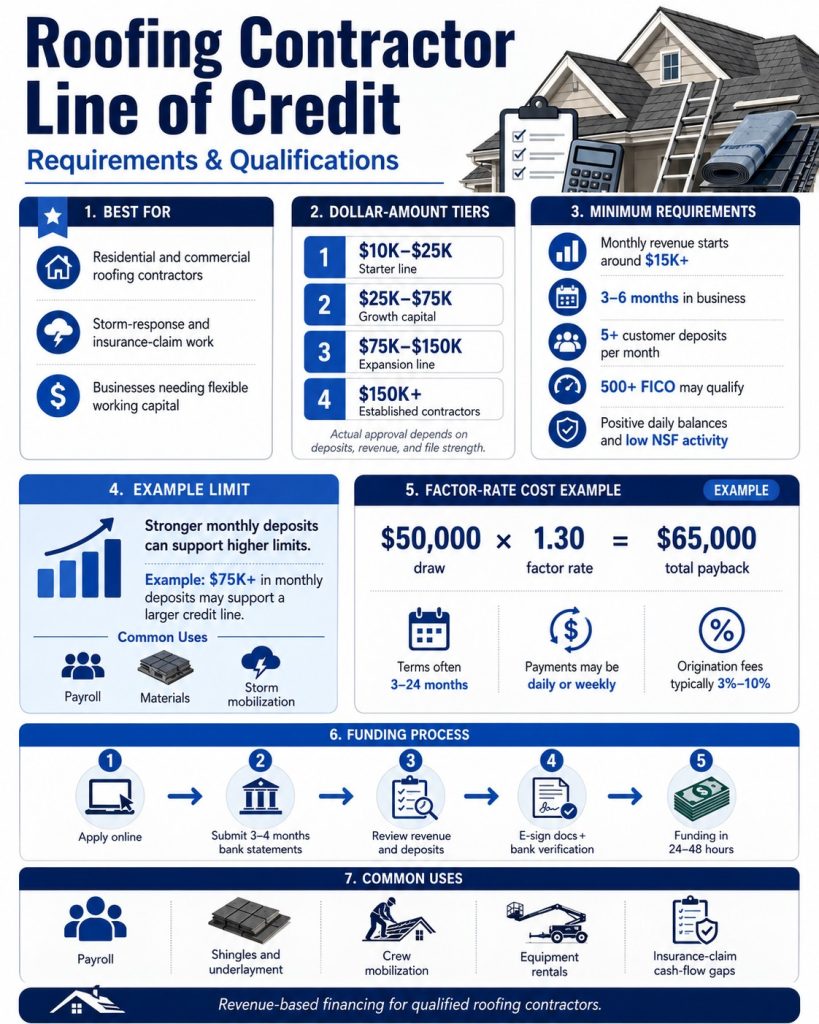
- Core Approval Filters: Requires a minimum of $15,000 in gross monthly revenue, at least 5 customer deposits per month, and a 6-month minimum time in business.
- Cash Flow Health Matters: Credit limits are based on your 3-to-4-month deposit average minus any existing debt. Keeping positive daily balances and fewer than 5 NSF charges secures the best rates.
- Flexible FICO Thresholds: You can apply with a credit score as low as 550, but crossing the 600 FICO mark unlocks significantly lower factor rates and higher borrowing limits.
Revenue Requirements and Approval Amount
In order to qualify for a roofing contractors line of credit you will need a monthly minimum revenue of $15,000 per month in gross monthly deposits over the last three or four months. Borrowers in NY and CA are subject to a four month review due to state compliance laws.
In addition, your credit limit is based around the average of the last 3 to 4 months of deposits less any unsecured loans/positions that you might already have. The following example illustrates how the calculation works.
- Month 1: $82,000
- Month 2: $75,000
- Month 3: $89,000
- Average: $88,000
This example is based on a non NY or CA borrower with no other positions. A borrower with a $40,000 position would need to subtract the loan amount from the average in order to determine how much they would be able to borrow, more or less.
Deposit Frequency
Underwriting requires that you have at least 5 or more monthly deposits. The more frequently your business deposits the lower the risk profile. Those with less than 5 deposits per month will more than likely be denied. Too few deposits each month shows instability which increases your risk profile.
Banking Activity Requirements
Your banking activity will be analyzed based on your daily balances, beginning and ending balances as well how many NSF charges you may have. You will need 5 or fewer NSF charges over the 3 to 4 month period in order to qualify for the best factor rates as well as terms. Five or more NSF charges will more than likely result in a higher factor rate and less favorable terms. Excessive NSF charges will result in a denial.
Underwriting will also analyze your banking activity throughout each month. You need to maintain positive daily and strong beginning and ending balances. You should also have 5 or less NSF charges each month in order to qualify for the best programs. Five or more NSF may result in higher factor rates. 10 or more NSF charges will usually result in a denial.
Underwriting also looks for consistent, steady monthly deposits each month as well. Declining monthly deposits may also result in non approval or a smaller loan. Example:
- Month 1: $100,000
- Month 2: $60,000
- Month 3: $15,000
This business does not have regular steady deposits and will more than likely be declined. Consistent monthly deposits show that your business is stable and capable of making the payments.
Time in Business
To qualify for a credit line for roofing contractors your business needs to have been open for at least 6 months. Those with 2 years or more in business will more than likely qualify for better rates and terms. Those with 6 months to 24 months may have higher rates due to the increased risk of a brand new business.
Credit Requirements
Although revenue is the primary consideration, a credit score of at least 550 is required to apply. Reaching a score of 600 or above opens the door to superior programs. A lower credit score doesn’t necessarily mean automatic rejection, but it will lead to increased factor rates. Having a robust credit score results in lower expenses and higher borrowing limits.
Existing Loans or Positions
You can still apply for a roofing contractors working capital credit line with existing loans. So long as your income is able to sustain the additional payment, there is no limit to how many additional positions your business can obtain. Keep in mind that your factor rate will more than likely increase due to the additional risk.
Secured vs. Unsecured Roofing Business Line of Credit
Key Takeaways
- Collateral vs. No Collateral: Secured lines require you to risk an asset (like a $500,000 property for a $400,000 line) that the bank can take if you default. Unsecured lines require zero collateral.
- Speed vs. Cost: Traditional bank lines offer the lowest interest rates but take weeks or months to close. Unsecured alternative lines cost more but put cash in your account within 24 to 48 hours.
- Paperwork Requirements: Banks demand 2 years of tax returns, P&Ls, and property appraisals. Alternative unsecured lines use a “no docs” process that only looks at your recent business bank statements.
- Payment Differences: Bank lines usually let you make cheap, interest-only payments. Unsecured lines use structured, amortized payments that pay down both the principal and the financing costs at the same time.
Revenue-Based Underwriting for Roofing Business Lines of Credit
How a Secured Roofing Business Line of Credit Works
A secured credit line and unsecured roofing company line of credit are two different products. Secured lines of credit are usually offered from banks such as Chase or Wells Fargo. This type of product is the least expensive and available with the most favorable terms. In order to qualify, you will need to pledge some sort of equity, usually in the form of a property. Banks will loan you 80% of the value of the pledged property. This means you will need to pledge a $500,000 piece of property to qualify for a $400,000 line of credit. Lenders will require that you submit a property appraisal, financial statements, tax returns, and other documentation. This process can take weeks or even several months to complete. The biggest drawback is that you will lose your property in the event of a default.
Unsecured Roofing Credit Line
Unsecured credit lines available from alternative lending sources do not require any collateral to be pledged. Instead, this type of product focuses on your ability to pay the loan by analyzing your recent bank statements instead of tax returns. Your eligibility is based on your deposits and cash flow. So long as you meet the minimum $15,000 or more per month in revenue, you are eligible to apply for an unsecured roofing contractors credit line. Approvals are available in 24 to 48 hours due to the streamlined “no docs” process. You can use your funding to cover expenses such as payroll, purchase shingles, or any business-related expense you may have.
Key Differences
The biggest difference between secured and unsecured roofing credit lines is the balance between cost and speed. Secured programs typically offer lower rates and longer repayment periods but require collateral and additional documentation. Repayment structures also vary. Secured credit lines often offer interest-only payment options, while many unsecured programs use amortized payments that include both principal and financing costs. In short, secured financing is based primarily on business assets, while unsecured financing is driven by revenue and cash flow performance.
Roofing Contractor Line of Credit Rates, Terms, and Repayment Options
Key Takeaways
- Factor Rates vs. Traditional Interest: Instead of accruing daily or monthly interest like a traditional bank or SBA loan, alternative credit lines use a fixed factor rate multiplier (for example, a 1.30 factor rate on a $50,000 draw means you repay exactly $65,000).
- The Repayment Term Tradeoff: Credit line terms range from 3 to 24 months. Shorter terms mean higher regular payments but lower overall financing costs, while longer terms drop your payment amount but increase total costs.
- Profile-Driven Rates and Terms: Your specific factor rate and repayment term are determined by a combination of your business cash flow, gross revenue, and credit profile. Better credit scores unlock the lowest rates and longest payback windows.
- Flexible Automated Payment Windows: Repayments are handled automatically via ACH and can be structured on daily, weekly, or monthly schedules. Higher-risk files or files with multiple positions default to daily, while strong cash flow profiles qualify for weekly or monthly options.
How Factor Rates Work for Roofing Credit Lines
Alternative lenders calculate finance charges differently from traditional loans. Traditional SBA and bank loans calculate charges based on interest rates that accrue either daily or monthly. Alternative lenders use what is called a factor rate. A factor rate is a straight-line calculation that uses an integer-based calculation that multiplies the loan amount by the factor rate. For example, a $50,000 roofing contractor credit line draw with a 1.30 factor rate would result in a total repayment of $65,000. A variety of details such as credit, cash flow, and revenue will determine your factor rate.
Roofing Credit Line Payment Terms Explained
Repayment terms for a roofing contractor credit line also range from 3 to 24 months. A shorter term results in a higher payment with lower finance charges. Longer terms have a lower payment amount with greater finance charges. Other factors such as credit, cash flow, and revenue also determine your term. Those with better credit qualify for more favorable terms instead of those with less-than-perfect credit.
Roofing Credit Line Payment Frequency Options
Roofing contractor credit lines are commonly repaid through daily, weekly, or monthly ACH payments. Daily payments are often used for higher-risk borrowers or those with multiple positions. Contractors with stronger qualifications, such as high revenue and a strong credit profile, may qualify for weekly or monthly payment schedules.

Bad Credit Roofing Business Line of Credit (Fast Approval Options)
Key Takeaways
- Credit Score Minimum: You can get approved with a credit score as low as 550, as long as your actual business revenue is strong.
- Deposits Over Credit: Alternative lenders care more about your current cash flow than your past credit mistakes. Showing $15,000+ in monthly deposits and positive daily balances can offset a bad credit score.
- Higher Starting Costs: Because bad credit carries more risk, you should expect starting factor rates around 1.40 or higher, along with shorter timelines to pay it back.
- Prove It and Pay Less: If you take an initial line of credit and make your payments on time, you build trust with the lender, which unlocks much better rates and longer terms on your next draws.
Can You Qualify with Bad Credit?
Yes, you can still qualify with bad credit so long as you meet the minimum qualification requirements such as revenue and healthy cash flow. You will need at least a 550 FICO credit score to be considered for eligibility. Unlike traditional banks and the SBA who focus heavily on your credit score and last 2 years of business and personal tax returns, alternative lenders look at your overall ability to repay the loan. This makes revenue-based financing a practical option for roofing contractors who have experienced past credit challenges but continue to generate consistent income.
How Revenue and Cash Flow Offsets Credit Risk
Underwriting looks primarily at your revenue to determine your eligibility. You will need to have at least $15,000 or more in gross deposits as well as positive daily and beginning/ending balances. Underwriters will review the last 3 to 4 months of business bank statements (with a 4-month lookback for NY and CA) in order to determine the strength of your business. Strong monthly deposits and stable banking activity can help offset a lower credit score and increase your chances of getting approved. Roofing companies with active projects, recurring customer payments, and healthy bank balances are often viewed more favorably by underwriters.
What to Expect with Terms
Applying for a credit line for roofing contractors with bad credit is similar to applying for any other lower-credit financing product. You can expect factor rates starting at 1.40 or higher with shorter repayment terms. However, once you have successfully established a solid repayment history with the lender, you may qualify for better rates and terms on future draws.
How to Apply for a Construction Business Line of Credit for Roofing Contractors
Key Takeaways
- Safe Credit Check: Filling out the application only requires basic info like your EIN and address. It uses a soft credit check, so your personal credit score won’t be hurt.
- Extra State Rules: If your roofing company is located in New York or California, you have to submit 4 months of bank statements instead of the usual 3 months to meet state laws.
- Background Check Tools: Lenders use secure systems (DataMerch and DecisionLogic) to look for past unpaid loans and double-check your current bank balances before giving final approval.
- Keep It Strictly Business: During the final phone interview, you must state that the funds are for business expenses only. Saying you plan to use the money for personal reasons will get you instantly denied.
- 4:00 PM Deadline for Fast Cash: If everything is approved before 4:00 PM ET, the money can be wired to your account the very same day. Otherwise, it arrives through standard direct deposit within 24 to 48 hours.
Submit Credit Application
The first thing you will need to do is submit an application via our secure online portal. You will need to provide information such as your first and last name, business and personal address, time in business, social security number, and your federal EIN number. Submitting the application results in a soft pull on your credit.
Submit Business Bank Statements
Once you complete the credit application, you will need to upload the last 3 to 4 months of business bank statements to the portal. Roofing company operators in NY and CA will need to submit the last 4 months in order to comply with state regulations.
Receive Pre-Approval Offer
You will receive a pre-approval offer if your company meets the minimum requirements. Your pre-approval will be available in a few hours depending on the complexity of your file. The offer will include your credit limit, factor rate, payment frequency, and repayment terms. You will be notified by email if you do not meet the minimum requirements and are welcome to try back in 90 days.
Sign Documents
You will then need to sign electronically via DocuSign once you accept the loan offer. Be prepared to provide a copy of your driver’s license, a voided business check, and in some cases, proof of business ownership.
Final Underwriting Review
The application then moves into final underwriting. During this stage, lenders review your file in greater detail and check DataMerch for previous defaults or unresolved obligations with other alternative lenders. Your lending activity is tied to your social security number as well as your EIN number. Any unresolved debts or prior defaults will cause your loan to be denied.
DecisionLogic Bank Verification
You may also be asked to connect your business bank account through DecisionLogic. This provides underwriters with real-time access to current account activity and helps verify that revenue remains consistent. It also allows lenders to identify any recently acquired financing that was not disclosed during the application process.
Merchant Interview
Before funding, you will be required to do a phone interview with underwriting. You will be asked basic information about your business as well as how you are going to use the funds. You can use your credit line for any business-related purposes. Stating that your funds will be used for anything other than business purposes will result in a loan denial.
Final Funding
After successfully completing underwriting and the merchant interview, funds are cleared for disbursement. Funds are typically sent via same-day wire transfer so long as you meet the 4:00 PM ET wire cutoff time. You can have your funds in your bank account in as little as 24 to 48 hours, sometimes even the same day.

Common Ways Roofing Contractors Use a Line of Credit
Key Takeaways
- Buy Brand-Name Materials: Buy top materials like GAF, Owens Corning, and CertainTeed right away without draining your cash.
- Cover Payroll On Time: Keep your crew paid when waiting on slow insurance checks or customer payments.
- Handle Large Commercial Jobs: Float the heavy upfront costs of big jobs while waiting for final project milestones to clear.
- Save with Bulk Buying: Get the cash you need to rent equipment, buy dump trailers, or purchase materials in bulk for big discounts.
Purchasing Owens Corning, GAF, and CertainTeed Materials
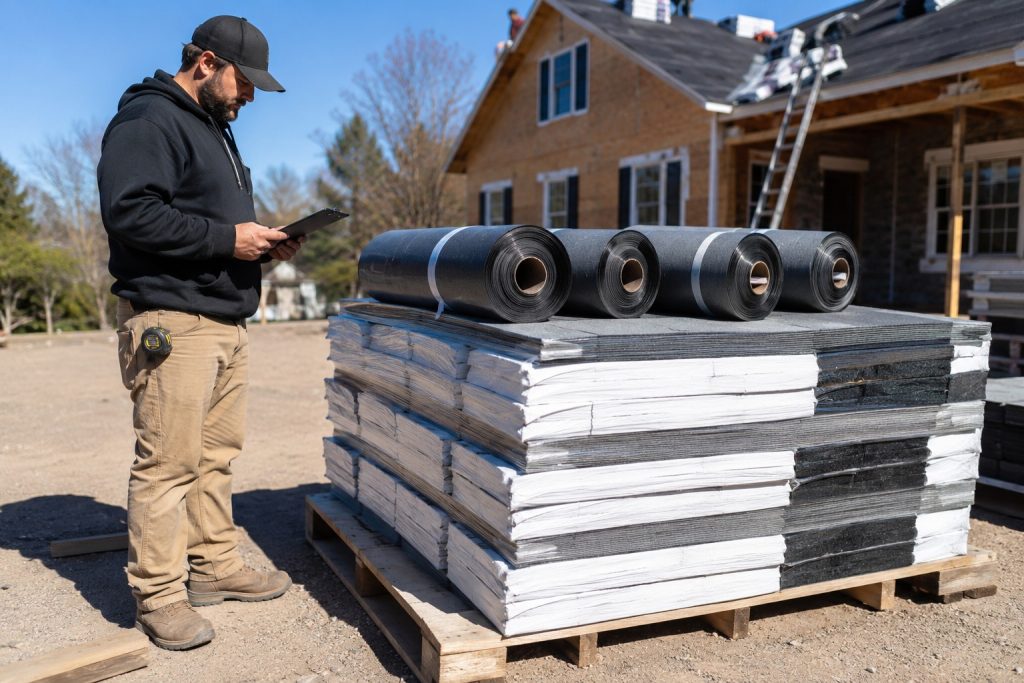
Roofing contractors frequently use a line of credit to secure premium, brand-name materials from top manufacturers like Owens Corning, GAF, and CertainTeed. This allows you to deliver top-tier quality to your clients immediately while keeping your cash reserves intact in the bank.
Covering Payroll While Waiting for Insurance Checks
It is incredibly common for roofing companies to face payroll tight spots while waiting on insurance adjusters or customer checks to clear. A revolving line of credit provides the steady working capital needed to ensure your crew gets paid on time and your jobs never lose momentum.
Funding Commercial Roofing Projects and Managing Retainage
Large commercial contracts demand massive upfront capital for materials, payroll, and insurance, often while dealing with strict retainage percentages or delayed draw schedules. A contractor line of credit bridges these substantial cash flow gaps, keeping your operations liquid until the final project milestones clear.
Purchasing Dump Trailers, Equipment Rentals, and Bulk Materials
Running multiple jobs simultaneously requires highly flexible cash flow. A revolving line of credit gives you the immediate buying power to purchase roll-off dump trailers, rent specialized machinery, or buy materials in bulk to lock in steep volume discounts.
Construction Business Lines of Credit for Other Trade Contractors
Key Takeaways
- Maintains Service Momentum: Quick capital lets HVAC and electrical crews execute installations and emergency service calls on schedule without waiting on customer invoices.
- Secures Critical Supply Chains: Provides immediate cash to stockpile vital inventory, like specialized refrigerants or expensive copper wire, ahead of high-demand seasons.
- Bridges Receivable Gaps: Helps plumbing and landscaping contractors manage heavy payroll, equipment costs, and overhead when accounts receivable outpace cash on hand.
Line of Credit for HVAC Contractors
HVAC contractors can use a revolving credit line to make business related purchases such as stock up on R32 refrigerant, cover payroll or even manage season demands. Fast access to capital helps keep installations and service calls on schedule.
Line of Credit for Electrical Contractors
Electrical contractors use working capital to purchase wire, panels, and other materials while waiting for customer payments. A revolving credit line helps bridge cash flow gaps on commercial projects.
Line of Credit for Plumbing Contractors
A plumbing contractor can use their revolving line of credit to purchase materials and cover payroll while waiting on payment from customers. Access to working capital can keep your crews moving without interruption.
Line of Credit for Landscaping Contractors
Landscaping contractors must oftentimes wait on commercial customers that pay net 30, 60 or even 90 days. This can cause issues for your cash flow if you are not prepared. Having access to fast funding helps keep your operations going when customer receivables exceed cash on hand.
Frequently Asked Questions (FAQ)
Can I qualify for a roofing contractor line of credit with bad credit?
Yes, you can still qualify with a credit score as low as 550 if your roofing business generates at least $15,000 in monthly deposits and has healthy cash flow. Revenue-based lenders place more emphasis on your most recent business bank statements than your credit score.
How much can I qualify for with a roofing business line of credit?
Your credit limit is only limited by your revenue and cash flow. Underwriting bases your approval around the average of your last 3 to 4 months of deposits (NY and CA must submit 4 months) less any outstanding unsecured positions/loans that you may already have.
What documents do I need to apply for a roofing contractors credit line?
You only need to submit a brief online credit application and provide your last 3 to 4 months of business bank statements. You will also need a voided check, driver’s license and proof of business ownership for final funding.
How fast can I receive funding?
Once your application has been pre-approved and all documents required have been submitted then you can receive your funding in 24 to 48 hours. In some cases, we can fund the same day.
Can I use a roofing line of credit to purchase materials?
Yes, you can use your line of credit to purchase roofing materials such as shingles, underlayment, flashing, fasteners, and other supplies needed to complete residential or commercial roofing projects. You cannot use your roofing contractors credit line for personal purchases.
Can I use a roofing contractor line of credit to cover payroll?
Yes, roofing contractors use a revolving line of credit to pay employees, subcontractors, payroll taxes, and other operating expenses while waiting for insurance proceeds or customer payments.
Do I need collateral to qualify for a roofing business line of credit?
No, you do not need any collateral to qualify for a loan.
Can I have another business loan and still qualify?
Yes, you can still qualify for another position/loan, so long as your business can support the additional payment. We have done up to 9 positions before.