
Key Takeaways
- Float Slow Customer Payments: Keep your business running smoothly when commercial clients take 30, 60, or 90 days to pay their invoices.
- Buy Expensive Parts Upfront: Cover the upfront cost of pricey materials like wire, panels, and breakers without draining your bank account.
- Fast Cash with No Tax Returns: Skip the standard stack of tax paperwork and get approved in 24 to 48 hours using just your recent bank statements.
- Bid on Bigger Jobs Comfortably: Get the peace of mind you need to bid on larger contracts, knowing you have the cash ready to pay your crew on time.
Electrical Contractor Cash Flow Challenges and Seasonality
A line of credit for electrical contractors can help solve many of the cash flow challenges electrical contractors face. Delayed customer payments, purchase orders, and commercial customers that pay on Net 30, 60, or even 90-day terms can create significant cash flow gaps. Meanwhile, you still need to cover payroll, 941 payroll taxes, insurance, and purchase materials such as conduit, electrical panels, breakers, switchgear, and wire. Access to a revolving line of credit helps you keep projects moving, take on additional work, and manage multiple jobs without draining your cash reserves.
Using a Construction Line of Credit to Cover Electrical Contracting Expenses
Access to working capital can help your business manage these expenses while you are waiting on customer payments. A revolving construction company credit line allows you to draw funds as you need, repay the balance, and draw when you need it again. This type of flexibility allows you to keep crews paid while materials arrive in a timely manner to the jobsite. Knowing you have immediate access to working capital allows your business to bid on larger projects with confidence, knowing the capital you need is available when you need it.
What You Will Learn About Electrical Contractor Credit Lines
As a former construction business owner, I have experienced firsthand the importance of having cash flow available when you need it. The purpose of my guide is to explain how revenue-based underwriting works, qualification requirements, credit limits as well as how to apply for an electrical contractors line of credit and secure funding in as little as 24 to 48 hours, sometimes less using your business bank statements vs. your tax returns.

Electrical Contractor Line of Credit Uses by Funding Amount
Key Takeaways
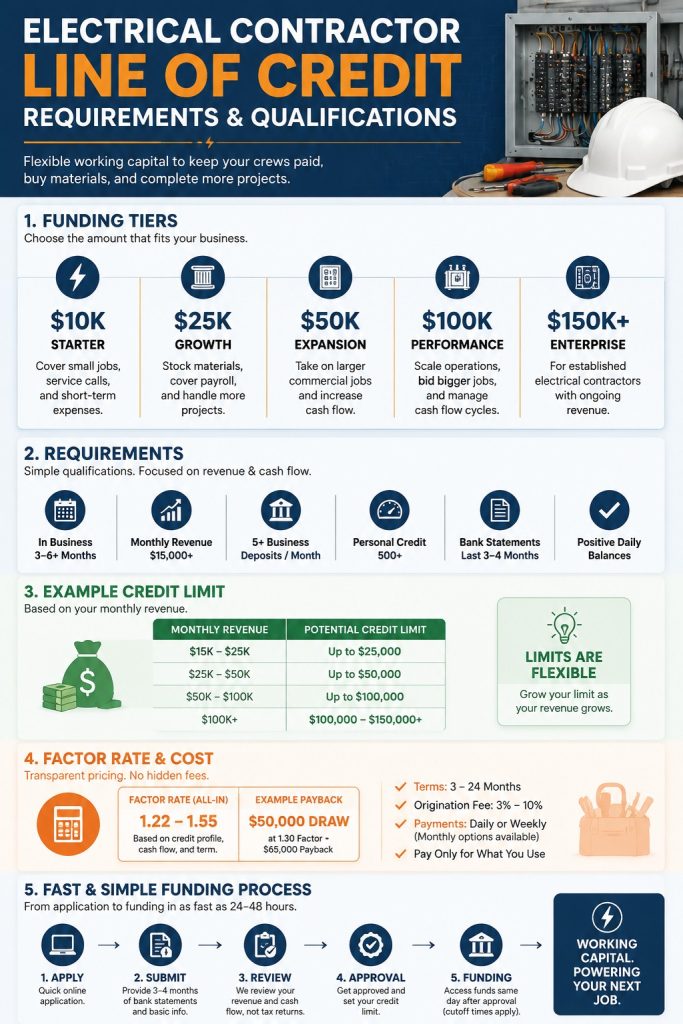
- Scale Funds to Fit the Job: Get credit limits that match your project size, from small $25,000 residential jobs up to $500,000 corporate contracts.
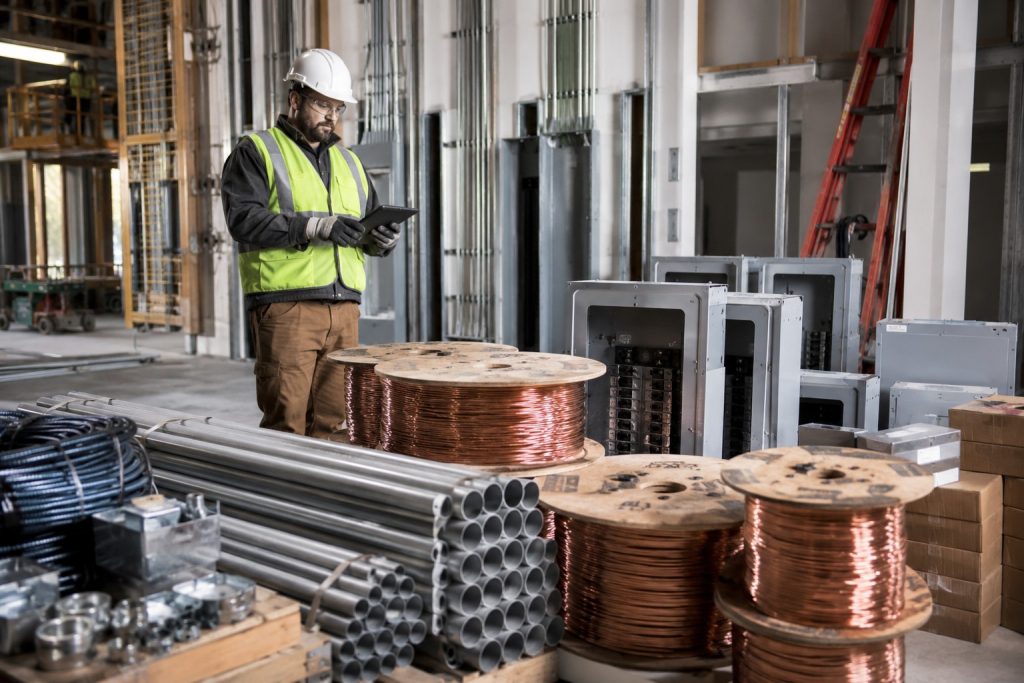
- Stock Up on Wire and Parts: Buy bulk materials like Romex cable, conduit, or expensive items like transformers right away without hurting your cash flow.
- Float Costs for Big Public Bids: Get the upfront capital you need to secure public bids, like schools and hospitals, which require purchase orders.
- Keep Multiple Crews Moving: Fund payroll, insurance, and field materials across several job sites at the exact same time without running out of money.
$25,000–$50,000 Electrical Contractor Line of Credit for Small Jobs
A credit line that ranges from $25,000 to $49,999 is perfect for a small to medium-sized electrical contracting business. You can use these funds for a variety of needs, such as bulk purchasing materials like wire, Romex cable, and conduit, or covering other expenses like payroll and insurance.
$50,000–$99,999 Electrical Contractor Line of Credit for Mid-Size Projects
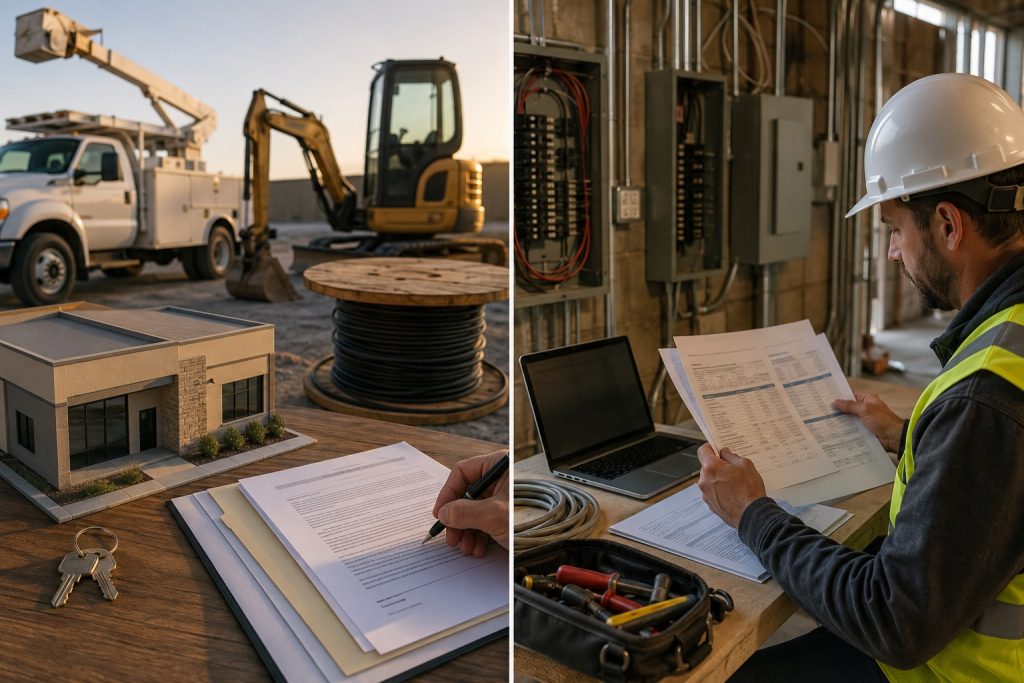
Electrical contractors working on projects such as a retail build-out or office renovation job can use these funds to protect their cash flow. These types of jobs use credit lines ranging from $50,000 to $75,000 or more to cover the purchase of materials and labor, or to manage multiple jobs while waiting on progress or final retainage payments.
$100,000–$199,999 Electrical Contractor Line of Credit for Commercial Projects
Commercial or municipal projects often issue purchase orders when awarding bids on new projects. These jobs go to general contractors who then issue a purchase order to the subcontractor. Electrical contractors who want to bid on projects related to schools, hospitals, office buildings, or large retail projects can use a $100,000 or $150,000 electrical contractor’s revolving credit line to finance these jobs, purchase materials, and cover payroll while waiting for the project to issue final payments.
$200,000–$250,000 Electrical Contractor Line of Credit for Large Commercial Contracts
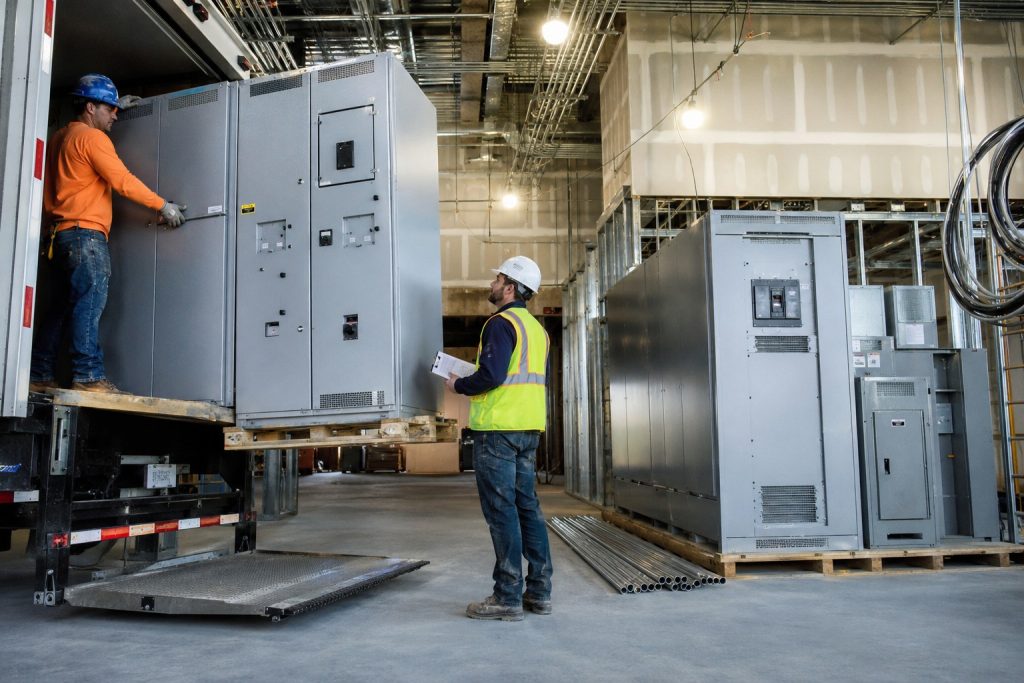
Electrical contractors working on municipal and industrial projects sometimes need higher limits, such as $200,000 or more. Apply for a $250,000 electrical contractor’s credit line to purchase expensive equipment such as transformers or switchgear while maintaining multiple job sites and larger payrolls.
$500,000 Electrical Contractor Line of Credit for Major Commercial Projects
A $500,000 line of credit is designed for established electrical contractors managing large commercial, industrial, and government contracts. These higher limits provide the working capital needed to finance major material purchases, support multiple project managers and crews, cover payroll, and keep several high-value projects moving simultaneously without disrupting cash flow.
Revenue-Based Underwriting for Electrical Contractor Business Lines of Credit
Key Takeaways
- Cash Flow Over Paperwork: Approvals look at your current gross revenue and bank deposits instead of requiring years of tax returns and audited financials.
- Overcomes Tax Deductions: Qualifies your business based on real, everyday bank deposits rather than the lower, distorted net income shown on tax returns.
- Fast 24 to 48 Hour Turnaround: Streamlined statement reviews deliver a decision within days, skipping the weeks or months required by traditional bank committees.
- State Lookback Compliance: Standard approvals use a 3-month bank statement review, while files in New York and California require 4 months of statements.
Revenue-Based Underwriting vs. Traditional Bank and SBA Loans
Traditional bank and SBA lenders require extensive paperwork such as 2 years of personal and business tax returns, 2 years of personal and business bank statements, and audited financial statements such as balance sheets and profit and loss statements, as well as a FICO score of 680 or better. In some cases, banks may even want collateral, which limits what you can borrow based on your available equity. Bank and SBA loans have the best financing rates; however, they are much more difficult to obtain and take much longer.
Revenue-based lenders take a different, more streamlined approach. Instead of focusing on your tax returns and credit, underwriters focus on your gross revenue as well as the overall health of your cash flow. Underwriting is able to get a good picture of your business by analyzing the last 3 to 4 months of business bank statements. This streamlined process allows underwriting to focus on your current activity in order to determine your eligibility. This process takes only 24 to 48 hours, sometimes less, compared to a bank or the SBA which may take weeks or months.
How Electrical Contractor Credit Line Approval Amounts Are Calculated
Your approval is based around the average of your last 3 to 4 months of gross deposits. Borrowers in NY and CA will need to submit the last 4 months for examination, less any existing unsecured debts you may already have. The greater your revenue, the larger your credit limit may be. Electrical contractors with stable monthly deposits and healthy banking activity generally qualify for larger credit lines and better pricing than businesses with inconsistent revenue.
Why Business Bank Statements Matter More Than Tax Returns
Underwriting evaluates your business based on what your cash flow looks like today versus last year’s tax returns. They view your most recent bank statements in order to verify your income and analyze cash flow trends over the last 3 to 4 months. Strong, consistent deposits with properly managed cash flow indicate that your business is capable of making a payment. On the other hand, tax returns show a more distorted view of your income based on deductions. This allows electrical contractors with strong revenue but lower taxable income to qualify based on the actual performance of their business rather than accounting deductions taken to reduce taxes.

Electrical Contractor Line of Credit Requirements and Qualifications
Key Takeaways
- $15,000 Revenue Threshold: Requires a minimum of $15,000 in monthly gross deposits, with credit limits determined by averaging your last 3 to 4 months of cash flow.
- Deposit Diversification: You must show at least 5 or more customer deposits per month; fewer deposits signal customer concentration and increase risk profiles.
- Strict Balance Controls: Maintaining positive daily bank balances and keeping NSF charges under 5 per month unlocks the most favorable alternative factor rates.
- Low Credit Floor: Contractors can secure working capital lines with a FICO score as low as 550, though scores above 620 access lower costs and higher limits.
Monthly Revenue Requirements and Credit Line Approval Amounts
You need to have a minimum of $15,000 per month in gross revenue to be considered for eligibility. The greater your revenue, the higher the credit limit you will be able to unlock. As mentioned, your approval is based around the average of your last 3 or 4 months of business bank statements (NY and CA must submit 4 months). The following example illustrates how the calculation works.
Month 1: $92,000
Month 2: $85,000
Month 3: $89,000
Average: $88,666.67
This is an example based on a non-NY or CA borrower without any other positions/loans. You will need to take the original amount of your existing loans and deduct that from the monthly average to determine, more or less, your borrowing limit.
Deposit Frequency and Customer Payment Activity
Underwriting requires that you have at least 5 or more monthly deposits. The more frequently your business deposits, the lower the risk profile. Those with less than 5 deposits per month will more than likely be denied. Too few deposits each month shows instability, which increases your risk profile.
Bank Account Health and Cash Flow Stability Requirements
Your banking activity will be analyzed based on your daily balances, beginning and ending balances, as well as how many NSF charges you may have. You need to maintain positive daily balances and strong beginning and ending balances. You should also have 5 or fewer NSF charges each month in order to qualify for the best programs and factor rates. Five or more NSF charges each month may result in higher factor rates and less favorable terms, while 10 or more NSF charges will usually result in a denial.
Underwriting also looks for consistent, steady monthly deposits each month. Declining monthly deposits may result in non-approval or a smaller loan limit. For example:
Month 1: $200,000
Month 2: $160,000
Month 3: $35,000
This business does not have regular, steady deposits and will more than likely be declined. Consistent monthly deposits show that your business is stable and capable of making the payments.
Time in Business and Electrical Contracting Experience Requirements
Underwriting requires a minimum of six months in business, although two or more years of operating history is preferred. More established electrical contractors with two or more years in business usually qualify for larger credit limits due to a proven track record of generating consistent revenue and successfully completing projects.
Credit Score Requirements for Electrical Contractors
We can accept credit scores as low as 550. Those with better credit scores of 620 or higher will qualify for lower factor rates, larger credit limits, and more favorable repayment terms.
Existing Loans or Positions
You can still apply for an electrical contractor’s working capital credit line if you have any existing business loans/positions. There is no limit to how many positions you may have so long as your cash flow can sustain the additional payment. However, keep in mind that taking on additional positions increases your risk profile, which will likely result in higher factor rates on your new credit lines.
Secured vs. Unsecured Electrical Contractor Business Line of Credit
Key Takeaways
- Collateral vs. No Collateral: Secured lines make you risk an asset like property or heavy equipment. Unsecured lines do not require you to pledge any collateral.
- Closing Speed: Bank lines require appraisals and take weeks or months to close. Alternative unsecured lines put cash in your account in 24 to 48 hours.
- What Limits Your Limit: A secured line is limited by the physical value of your assets. An unsecured line is limited only by your monthly bank deposits.
- How You Pay It Back: Bank lines often let you make cheap, interest-only payments. Unsecured lines require you to pay back both principal and fees with every draw.
Secured Electrical Contractor Credit Line
A secured credit line requires that you pledge some form of collateral such as real estate or heavy equipment. Typically, banks only give you 80% loan-to-value on real estate and much less on heavy equipment. This collateral can be repossessed in the event that the loan is not paid. A home equity loan is an example of a secured line of credit. This type of product is going to have the lowest financing costs; however, your credit line is limited by what you are able to pledge as collateral. This process also usually involves extensive documentation such as tax returns, bank statements, as well as property appraisals, which can take weeks or months. The biggest advantage to this type of loan is your financing costs are going to be the lowest. The biggest disadvantage is that your credit limit is limited by what you can pledge and the property can be seized in the event of a default.
Unsecured Electrical Contractor Credit Line
An unsecured electrical contractor’s line of credit does not require you to pledge any sort of collateral. Instead, your approval is based on your gross revenue as well as your cash flow. You are still eligible for approval so long as you are able to meet minimum requirements. You are only limited by your gross deposits and not your collateral. Revenue-based underwriting only requires that you submit a completed credit application and the last 3 to 4 months of business bank statements. This allows underwriting to look at your daily balances as well as your beginning and ending balances, deposits, and other information to make a quicker determination. This streamlined process often results in approvals within 24 to 48 hours, providing fast access to flexible working capital that can be used for payroll, material purchases, equipment rentals, or other business expenses.
Key Differences
There are a few major differences between a secured and unsecured line of credit for electrical contractors. The biggest difference is going to be the price. A secured credit line is going to be much cheaper. The other difference is that you will be allowed to make interest-only payments. Unsecured credit lines require that you make an interest and principal payment each time you make a draw. The other difference is that secured financing is based on the value of your assets, while unsecured financing is based on the strength of your revenue and cash flow.
Factor Rates, Terms, and Repayment for Electrical Contractor Credit Lines
Key Takeaways
- One Fixed Price: Cost is figured out using a flat multiplier right at the start, so you always know exactly how much cash you owe back.
- Pick Your Timeline: Pay off your balance in anywhere from 3 to 24 months, letting you choose between lower total costs or a smaller payment.
- Automatic Billing Cycles: Payments come out automatically on a daily, weekly, or monthly schedule based on how healthy your bank account is.
- Unlock Cheaper Rates Later: Keeping higher daily balances and clearing out other business debt will win you better terms on your next renewal.
How Factor Rates Work for Electrical Contractor Credit Lines
Revenue-based credit lines calculate finance charges differently. Banks charge interest rates that accrue either monthly or daily. Unsecured working capital calculates these charges based on a factor rate. A factor rate is based on a fixed multiplier, which is then multiplied by your loan amount to determine your finance charges. A $100,000 loan with a 1.35 factor rate has a total payback of $135,000. Factor rates start at around 1.20 and go as high as 1.45 or more depending on the complexity of your file. Those with poor cash flow and low credit are more than likely going to pay a higher rate. Contractors with stronger cash flow, higher credit scores, and healthier banking activity typically qualify for lower factor rates.
Electrical Contractor Credit Line Payment Terms Explained
Repayment terms range from 3 to 24 months and are approved on a case-by-case basis. A variety of factors such as cash flow and type of business will determine the length of your term. The shorter your term, the lower your finance charges. Longer terms are subject to increased finance charges; however, your payment is going to be less.
Electrical Contractor Credit Line Payment Frequency Options
Your payment frequency is also determined by a variety of factors and is approved on a case-by-case basis. Borrowers with consistent, strong revenue that demonstrate responsible cash flow management will more than likely qualify for either a weekly or a monthly payment. Contractors with multiple positions, low credit scores, and/or poor cash flow are more than likely subject to a daily payment. Improving your revenue, reducing existing debt, and maintaining healthy banking activity can help you qualify for less frequent payments and more favorable terms on future renewals.

Bad Credit Electrical Contractor Business Line of Credit (Fast Approval Options)
Key Takeaways
- Low 550 Credit Threshold: Personal credit damage from unexpected hardships will not disqualify you; programs accept credit scores down to 550.
- Cash Flow Takes Priority: Underwriters prioritize your current monthly bank deposits over historical personal credit scores.
- Demonstrated Repayment Capacity: Maintaining strong daily balances and consistent deposits proves your business can support the payments today.
- Incremental Rate Adjustments: Low credit profiles carry higher initial factor rates, but a solid payment history secures lower costs on renewals.
Can You Qualify with Bad Credit?
Bad things happen to good people. Events such as divorce or illness can damage your credit score. Fortunately, you can still qualify for an electrical contractor’s no-doc credit line with a FICO score as low as 550. Most banks require a credit score of 680 or better; however, we can get you funded so long as your cash flow will support the loan payment. Underwriting focuses on your bank deposits, cash flow, and overall financial performance to determine your eligibility. This means you can still qualify so long as you have consistent revenue and meet the minimum requirements, despite past credit challenges.
How Revenue Offsets Credit Risk
Underwriting reviews your revenue and your cash flow versus your tax returns and credit score. The last 3 to 4 months of revenue gives a good picture as to whether or not your business is capable of making the payment. Contractors with strong, consistent deposits with healthy bank balances will still qualify for a credit line regardless of past credit problems.
What to Expect with Terms
Unsecured working capital credit lines for electrical contractors are just like any other credit product. Bad credit does not automatically disqualify you from approval; however, higher factor rates typically apply. Expect to pay a factor rate starting at around 1.40 with a low credit score. However, paying your loan on time and demonstrating creditworthiness can significantly improve your chances of getting better rates and terms in the future.
How to Apply for an Electrical Contractor Line of Credit (24–48 Hour Funding)
Key Takeaways
- Fast Pre-Approval: The online application takes only a few minutes to complete, with no-obligation soft-pull offers typically generated within 4 hours.
- Bank Statement Requirements: Underwriters evaluate your last 3 to 4 months of business bank statements to verify steady revenue, with a full 4 months required for files in NY and CA.
- Underwriting Checks: Final approval relies on a secure DecisionLogic link to verify real-time balances and a DataMerch review to check for past commercial defaults.
- Same-Day Funding Cutoff: Once your merchant interview is wrapped up, wire transfers clear the same day if finalized before 4:00 PM ET.
Submit Credit Application
You will first need to submit a credit application via our online portal. You will need to provide basic information such as your name, business name, time in business, social security number, and federal EIN number. This only takes a few minutes to complete before you submit your business bank statements.
Submit Business Bank Statements
You will then need to submit the last 3 to 4 months of your business bank statements. Borrowers in NY and CA will need to submit 4 months of statements to satisfy commercial financing disclosure requirements. You may only submit business bank statements from a proper business checking account. We cannot accept statements from payment processors such as PayPal or Stripe.
Receive Pre-Approval Offer
We will then begin the pre-approval process once we have received all your proper documents. This usually takes about 4 hours, however, more complex files may take longer. Your no-obligation pre-approval offer will include your credit limit, payment terms, as well as frequency. This is only going to be a soft pull on your credit.
Sign Documents
You will receive your loan documents via DocuSign or something similar once you approve the offer. You will need to complete and sign the documents and also submit a copy of your driver’s license and voided check. In some cases, you will also be asked to provide proof of business ownership via the secretary of state or the pertaining tax documents such as your 1040 or K1.
Final Underwriting Review
Your file goes into final underwriting once you have submitted the loan documents. This process includes a more thorough background check as well as a DecisionLogic verification to confirm your recent banking activity as well as a DataMerch review to check for previous defaults or payment modifications. Any past unresolved defaults will typically result in a loan denial.
Merchant Interview
You will then be required to complete a merchant interview once you have passed final underwriting. At this point, you will be asked for information about your business as well as the use of funds. You may not use the loan for personal uses.
Final Funding
After successfully completing the interview, your funds are cleared for immediate release. Wire transfers usually arrive within the same day—so long as you finish up before the 4:00 PM ET cutoff. Any files cleared after the afternoon cutoff will hit the next business day. If you choose an ACH transfer, it can take up to two days to fully clear into your account.

Common Ways Electrical Contractors Use a Line of Credit
Key Takeaways
- Upfront Material Funding: Cover the heavy cash outlay required for expensive supplies like copper wire, conduit, panels, and switchgear before a project kicks off.
- Payroll Stability: Keep your field crews and electricians paid on time every week, avoiding labor disruptions while waiting on slow-paying construction draws.
- Commercial Bid Capital: Secure the necessary liquidity to handle upfront mobilization, engineering, and equipment rental costs required for large commercial contracts.
- Retainage & Closeout Buffer: Bridge the financial gap when your final profits are withheld during punch list inspections or while waiting for a Certificate of Occupancy.
Purchasing Wire, Conduit, Panels, Breakers, and Switchgear
Electrical contractors working on commercial projects often have to wait for payment until projects have been issued a Certificate of Occupancy. In the meantime, expensive materials such as copper wire and conduit need purchasing. Access to working capital allows your business to keep projects moving forward without any delays.
Covering Payroll While Waiting for Progress Payments
An electrical contractors credit line helps cover payroll expenses while waiting on retainage, draw or progress payments. This ensures electricians and field crews are paid on time, allowing projects to stay on schedule without disrupting cash flow or delaying ongoing operations.
Funding Commercial Electrical Projects
Electric subcontractors that bid on commercial jobs require a significant investment to be made upfront for materials, labor, rental equipment, permits and other necessities needed to complete the job. A line of credit provides the cash flow needed to begin projects immediately.
Managing Retainage and Delayed Customer Payments
Commercial contracts usually withhold retainage until the job has been completed according to the “final punch list”. This means that the job will be delayed until all final details have been done according to the owner’s satisfaction. A line of credit helps bridge these payment delays without disrupting operations.
Purchasing Bucket Trucks and Equipment Rentals
Contractors can use available credit to rent or purchase bucket trucks, lifts, trenchers, generators, and other specialized equipment needed to complete projects efficiently.
Taking Advantage of Bulk Material Discounts
Buying electrical supplies in bulk can lower project costs. A line of credit allows contractors to capitalize on supplier discounts while preserving working capital for other business expenses.
Construction Business Lines of Credit for Other Trade Contractors
Key Takeaways
- Target Seasonal Shifts: Unlock working capital to handle summer and winter inventory surges, keeping your crews fully stocked and moving year-round.
- Cover Upfront Material Costs: Purchase bulk job supplies like shingles, conduit, PVC piping, sod, and irrigation parts before starting a project.
- Bridge Retainage Gaps: Maintain steady weekly cash flow to cover payroll, equipment rentals, and fleet repairs while waiting on delayed commercial invoices.
- Fund Targeted Marketing: Deploy flexible revolving capital into active Google and Facebook advertising campaigns to drive fresh inbound service leads.
Line of Credit for HVAC Contractors
An HVAC contractor uses a construction business line of credit to purchase inventory such as air conditioners, R-32 refrigerant, and ductwork, as well as other supplies needed to manage the summer and winter seasonal spikes. A line of credit can help your business handle these surges, cover payroll, fund emergency service calls, or even take on large commercial HVAC installations.
Line of Credit for Roofing Contractors
Roofing contractors rely on credit lines to purchase shingles, underlayment, flashing, and other roofing materials upfront. A line of credit also helps fund payroll, equipment rentals, insurance claim projects, and cash flow gaps caused by retainage and delayed payments.
Line of Credit for Plumbing Contractors
Plumbing contractors often use a line of credit to purchase inventory such as PVC or PEX pipe, as well as toilets or sinks needed to complete large commercial jobs. A credit line can also be used to cover payroll, handle repairs, or even finance an advertising campaign on Facebook or Google.
Line of Credit for Landscaping Contractors
Landscaping contractors utilize business lines of credit to secure essential materials like sod, nursery stock, pavers, and irrigation supplies upfront. Beyond purchasing project materials, a flexible revolving line provides vital working capital to cover weekly crew payroll, handle specialized equipment rentals, and manage fleet maintenance. This immediate access to capital smoothly bridges seasonal cash flow fluctuations during slower months.